Table of Contents
Introduction
Final year project on YouTube–based learning has become a powerful force in modern education due to the rapid growth of digital technologies and online knowledge-sharing platforms. The digital revolution has fundamentally reshaped the educational landscape, creating unprecedented opportunities for learners to access information anytime and anywhere. Among all digital learning methods, video-based education has emerged as one of the most dominant approaches, with YouTube acting as a massive global repository of academic, technical, and professional learning resources. Students increasingly rely on video platforms for tutorials, concept explanations, project guidance, and skill development, making final year project on YouTube an essential research and implementation domain.
Despite its popularity, the final year project on YouTube learning ecosystem reveals serious limitations in how educational videos are consumed and understood. Most learners engage with video content passively, watching lectures or tutorials without meaningful interaction. This passive learning approach restricts comprehension and long-term retention, creating a significant gap between information delivery and actual learning. Educational research consistently indicates that students retain far less knowledge through one-way video consumption compared to interactive learning environments, highlighting a major inefficiency in the current final year project on YouTube education model.
To address these limitations, YouTalk is proposed as an innovative solution within the scope of a final year project on YouTube. The platform redefines video-based learning by transforming static YouTube videos into interactive, conversational knowledge sources. Instead of treating videos as fixed content, YouTalk enables learners to ask questions, clarify doubts, and explore concepts directly from the video material using artificial intelligence. This approach bridges the gap between content availability and meaningful understanding, significantly enhancing the educational value of final year project on YouTube resources.
The technical foundation of YouTalk represents a convergence of modern computing technologies tailored for a final year project on YouTube. The system processes YouTube videos by extracting audio, generating transcripts, and analyzing visual and textual information. Advanced natural language processing and machine learning techniques enable the platform to interpret video content contextually and generate accurate, relevant responses to user queries. While the underlying architecture is complex, the user experience remains intuitive, ensuring that learners with varying technical backgrounds can benefit from this final year project on YouTube solution.
The relevance of this final year project on YouTube is further amplified by the rapid adoption of online learning following global events such as the COVID-19 pandemic. Educational institutions, organizations, and self-learners now rely heavily on digital platforms for knowledge acquisition. However, traditional video platforms focus primarily on content delivery rather than interaction or personalization. YouTalk addresses this gap by enabling personalized questioning, real-time clarification, and adaptive learning experiences, making final year project on YouTube–based education more effective and learner-centric.
Beyond its immediate application, YouTalk demonstrates how artificial intelligence can enhance—not replace—human-led education within a final year project on YouTube framework. By converting videos into conversational learning tools, the platform extends the usability of existing educational content without requiring additional effort from content creators. This approach supports educational scalability, accessibility, and customization, reinforcing the long-term significance of the final year project on YouTube domain.
Aligned with constructivist learning theories, YouTalk promotes active knowledge construction rather than passive consumption. Learners become participants in their educational journey by interacting with video content through intelligent dialogue. Research shows that such interactive engagement significantly improves comprehension, retention, and learning outcomes. This makes YouTalk a strong and impactful implementation of a final year project on YouTube aimed at improving digital education effectiveness.
This report documents the complete development lifecycle of YouTalk as a final year project on YouTube, covering conceptual design, system architecture, implementation, and evaluation. The subsequent chapters explore objectives, problem identification, technical design, and expected outcomes, presenting a comprehensive study of how emerging technologies can address persistent challenges in video-based learning.
OBJECTIVES
The objectives of YouTalk are carefully designed to ensure both educational effectiveness and technical robustness within the scope of a final year project on YouTube. These objectives address learning challenges, system performance, scalability, and ethical considerations.
Primary Educational Objective
The primary objective of this final year project on YouTube is to transform passive video watching into an active learning experience. Traditional YouTube-based education relies on one-way information delivery, limiting learner engagement. YouTalk enables two-way interaction by allowing users to ask questions and receive intelligent, video-specific responses. This shift enhances comprehension, retention, and practical application, fulfilling the core educational goal of the final year project on YouTube.
Technical Implementation Objectives
From a technical perspective, this final year project on YouTube aims to build a reliable system capable of processing diverse video formats. Objectives include efficient video acquisition, accurate audio extraction, transcript generation, and structured data storage. The architecture must support multiple concurrent users while maintaining performance, ensuring a seamless interactive experience.
Intelligence and Response Quality Objectives
A critical objective of this final year project on YouTube is developing an intelligent question-answering mechanism that understands both user intent and video context. The system must generate accurate, relevant, and coherent responses using natural language processing and machine learning techniques, ensuring high educational value.
Accessibility and Usability Objectives
This final year project on YouTube prioritizes accessibility by supporting transcripts for hearing-impaired users, intuitive interfaces for varied skill levels, and flexible interaction modes. The system is designed to function effectively across devices and network conditions, ensuring broad usability.
Performance and Reliability Objectives
Performance goals for the final year project on YouTube include high processing success rates, low response latency, and high system availability. Reliable error handling and consistent performance are essential to user trust and platform adoption.
Scalability and Future-Readiness Objectives
Scalability is a core objective of this final year project on YouTube. The system architecture supports increasing users and content volume while remaining adaptable to future AI advancements, additional languages, and integration with other platforms.
Integration and Interoperability Objectives
The final year project on YouTube aims to integrate seamlessly with learning management systems and educational tools through APIs and standard formats, enhancing its practical applicability.
Feedback and Improvement Objectives
Continuous improvement is integral to this final year project on YouTube. User feedback and interaction analytics are used to refine system accuracy, usability, and educational effectiveness over time.
Cost-Effectiveness and Sustainability Objectives
To ensure sustainability, the final year project on YouTube focuses on efficient resource utilization, optimized processing pipelines, and cost-aware system design.
Ethical and Responsible Implementation Objectives
Ethical considerations are central to this final year project on YouTube, including copyright compliance, data privacy, transparency, and responsible AI usage.
Measurable Success Indicators
Success metrics for the final year project on YouTube include engagement levels, response accuracy, system uptime, and user satisfaction, ensuring objective evaluation.
PROBLEM IDENTIFICATION
The final year project on YouTube addresses multiple limitations in existing video-based learning systems that hinder effective education.
Passive Consumption Problem
Current final year project on YouTube learning relies heavily on passive viewing, resulting in low retention and comprehension. Lack of interaction contradicts proven active learning principles.
Content Navigation Problem
Learners struggle to locate specific information in long videos, making final year project on YouTube content inefficient for targeted learning.
Comprehension Verification Problem
Traditional final year project on YouTube platforms lack immediate feedback mechanisms, preventing learners from validating understanding in real time.
Accessibility and Inclusivity Problem
Many learners face barriers due to missing transcripts, language challenges, or rigid pacing, limiting the effectiveness of final year project on YouTube resources.
Content Contextualization Problem
Videos often lack structured connections to prerequisite or advanced concepts, weakening conceptual understanding in final year project on YouTube learning.
Personalization Gap Problem
Generic content fails to address individual learning needs, reducing the educational impact of final year project on YouTube platforms.
Knowledge Application Problem
Passive observation without guided practice limits skill development in final year project on YouTube learning environments.
Technical Reliability Problem
Inconsistent video downloading, transcription errors, and format issues reduce the reliability of final year project on YouTube implementations.
Resource Fragmentation Problem
Learning materials remain scattered across platforms, increasing cognitive load for final year project on YouTube learners.
Scalability and Cost Problem
Existing interactive video solutions are costly and difficult to scale, restricting widespread adoption of final year project on YouTube enhancements.
Measurement and Analytics Problem
Limited learning analytics prevent meaningful evaluation of learner progress in final year project on YouTube systems.
Integration Deficiency Problem
Lack of integration with educational tools results in fragmented learning experiences within final year project on YouTube ecosystems.
Proposed Solution
Comprehensive System Architecture
The proposed final year project on YouTube introduces YouTalk, an integrated solution designed to overcome the multifaceted challenges of video-based learning through a carefully engineered system architecture. The platform follows a multi-layered design that begins with YouTube video acquisition and progresses through content processing, structured storage, user interaction, and intelligent response generation. This architecture transforms passive videos into interactive learning partners, ensuring that the final year project on YouTube maintains contextual continuity across all user interactions. By preserving video context, the system ensures that generated responses remain aligned with the original educational material while offering enhanced explanations and insights.
Automated Content Processing Pipeline
At the core of this final year project on YouTube is an automated content processing pipeline that deconstructs educational videos into analyzable components. Processing begins when users submit YouTube URLs, after which the system employs advanced algorithms to download videos while maintaining quality and compatibility. Audio streams are extracted using robust codec-handling techniques, followed by speech recognition models that generate accurate transcripts. This automation allows the final year project on YouTube to operate without requiring technical expertise from users, making advanced educational technology widely accessible. Built-in validation and error-handling mechanisms ensure consistent performance across diverse video formats.
Intelligent Question-Answering Engine
The final year project on YouTube implements an intelligent question-answering engine that combines multiple AI techniques to understand user intent and generate context-aware responses. Instead of simple keyword matching, the system performs semantic analysis to identify relevant sections within video transcripts, metadata, and temporal markers. For complex queries, the engine synthesizes information from multiple video segments while maintaining clear references to the original content. This ensures that responses generated by the final year project on YouTube are accurate, meaningful, and grounded in the source material.
Multi-Modal Content Accessibility Framework
Accessibility is a key focus of this final year project on YouTube. YouTalk delivers content in multiple synchronized formats, including video, audio, and text. Automatically generated transcripts support hearing-impaired learners, while audio-only options enable learning in environments where visual attention is limited. Temporal synchronization across formats allows seamless transitions without loss of context. This multi-modal framework significantly enhances the inclusivity and usability of final year project on YouTube–based educational resources.
Interactive Learning Interface Design
The user interface of the final year project on YouTube is designed to support natural and intuitive interaction. Question-asking functionality is embedded directly within the video playback environment, allowing learners to pause content and seek clarifications instantly. The system maintains contextual awareness by linking questions to specific video timestamps, ensuring accurate and relevant responses. This unified interface reduces cognitive load and creates a focused learning experience aligned with the objectives of the final year project on YouTube.
Adaptive Response Generation System
YouTalk incorporates adaptive response mechanisms that personalize learning within the final year project on YouTube. By analyzing user queries, interaction history, and feedback, the system adjusts response depth and complexity. Beginner learners receive foundational explanations, while advanced users benefit from detailed technical insights and conceptual synthesis. This adaptability allows a single video to support diverse learner profiles, effectively addressing personalization challenges common in final year project on YouTube platforms.
Knowledge Verification and Feedback Integration
An essential feature of this final year project on YouTube is its ability to verify learner understanding. The system offers follow-up questions, alternative explanations, and clarification prompts to reinforce comprehension. User feedback on response quality is continuously collected and analyzed to improve system accuracy. This feedback-driven improvement cycle enables the final year project on YouTube to evolve over time, enhancing both educational effectiveness and user trust.
Scalable Processing Infrastructure
Scalability is addressed through a distributed processing architecture within the final year project on YouTube. Concurrent processing, optimized databases, and intelligent caching allow multiple videos and users to be handled simultaneously. The modular design supports horizontal scaling, ensuring that the system remains responsive as user demand increases. This makes the final year project on YouTube suitable for both individual learners and large institutional deployments.
Privacy-Preserving Implementation
The final year project on YouTube integrates privacy-preserving principles throughout its design. Data collection is minimized, anonymization techniques are applied where feasible, and user interactions are treated as private by default. Secure data handling and transparent usage policies ensure ethical compliance while maintaining full system functionality.
Cross-Platform Compatibility Strategy
To maximize accessibility, the final year project on YouTube employs responsive web design and cross-platform compatibility strategies. The system functions effectively across desktops, tablets, and smartphones, adapting to different screen sizes and operating environments. Core features remain accessible even on lower-end devices, reducing technological barriers for learners.
Integration with Existing Educational Ecosystems
Rather than operating in isolation, the final year project on YouTube is designed to integrate seamlessly with existing educational tools. Support for standard learning management systems, content export options, and interoperable formats allows YouTalk to enhance current learning workflows instead of replacing them.
Continuous Improvement Framework
The final year project on YouTube incorporates analytics and machine learning to support continuous improvement. User interaction data and learning indicators are analyzed to refine response quality and system behavior. Improvements occur both immediately through feedback and over time through aggregated learning patterns.
Economic Sustainability Model
Cost efficiency is a core consideration of this final year project on YouTube. Optimized algorithms, reduced redundancy, and flexible deployment models ensure economic viability for individuals and institutions alike. The system balances affordability with technical quality, supporting long-term sustainability.
Comprehensive Evaluation and Validation Approach
Finally, the final year project on YouTube includes evaluation mechanisms that measure both technical performance and educational impact. Metrics such as response time, system reliability, user satisfaction, and learning outcomes ensure ongoing validation and improvement. This dual evaluation approach ensures that technological innovation consistently serves pedagogical goals.
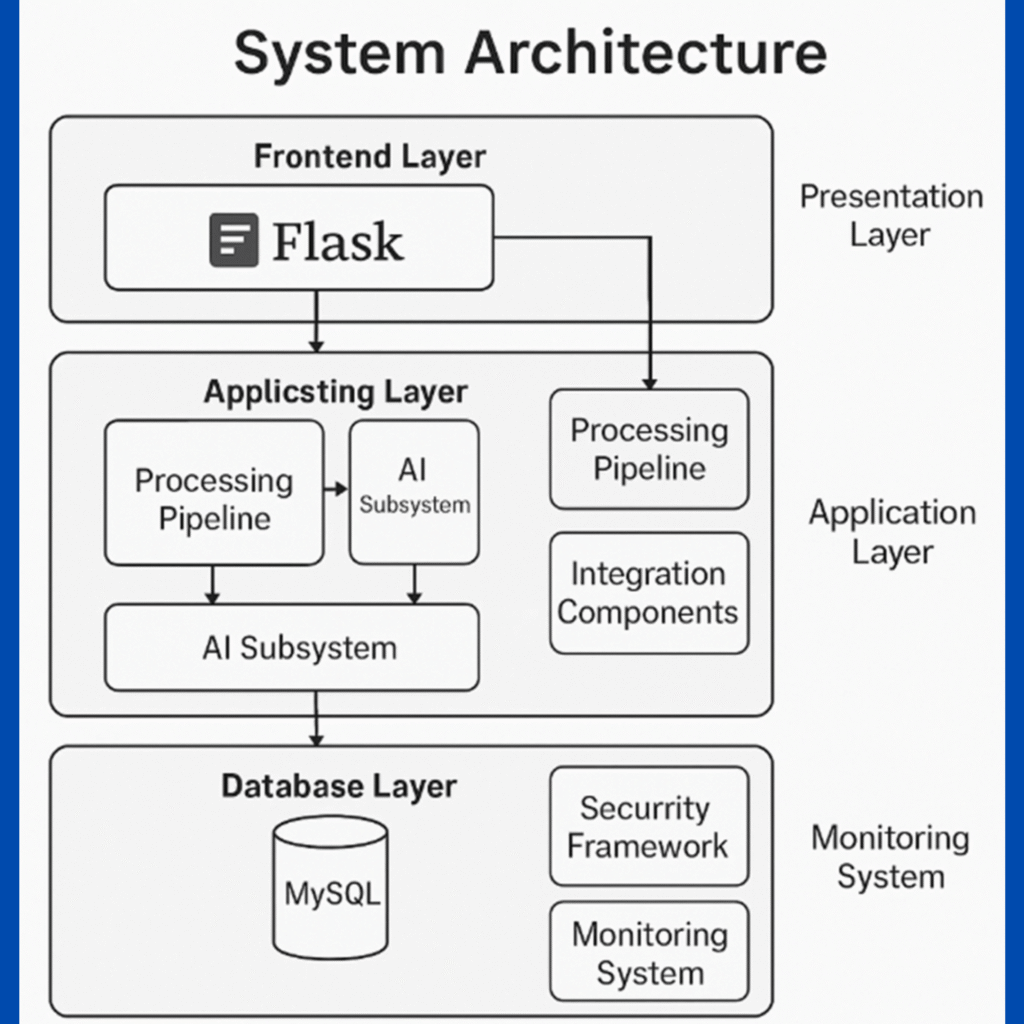
System Architecture
The system architecture is designed to support an engineering final year project YouTube implementation with a modular and scalable three-tier structure that separates presentation, application logic, and data management. This design ensures maintainability, performance optimization, and smooth expansion for real-time learning use cases.
The frontend layer is developed using Flask templates combined with HTML, CSS, and JavaScript to deliver a responsive interface suitable for a final year project demo YouTube. This layer manages user authentication, interactive video playback, and real-time question interaction, ensuring a smooth learning experience across devices.
The application layer is powered by a Flask-based server responsible for handling core workflows typically demonstrated in a final year project explanation YouTube. It manages user sessions, coordinates video processing tasks, and routes intelligent queries using multithreading techniques to support concurrent users efficiently.
The database layer utilizes MySQL to store structured information, making it suitable for a real time final year project YouTube environment. Normalized tables store user details, video metadata, interaction logs, and cached responses, ensuring fast data retrieval and reduced system load.
A dedicated processing pipeline manages YouTube video downloading, multimedia handling, and transcription tasks commonly highlighted in a final year project presentation YouTube. Tools such as yt-dlp and FFmpeg are used for video and audio processing, while speech-to-text modules convert audio streams into searchable transcripts with strong error-handling mechanisms.
The AI subsystem enables intelligent interaction similar to advanced final year project ideas YouTube implementations. It performs semantic analysis on video transcripts and applies machine learning techniques to generate context-aware answers. Intelligent caching further improves response time and system efficiency.
Integration components connect external services such as the YouTube API and speech recognition engines, ensuring reliable performance even in variable network or content conditions. These components are essential for building a robust final year project documentation YouTube–ready system.
Background processing modules use thread-based task execution to handle resource-intensive operations such as video downloads and transcription. This ensures uninterrupted user interaction, which is critical for scalable latest final year projects YouTube platforms.
A comprehensive security framework is implemented to meet software engineering standards expected in a btech final year project YouTube. This includes HTTPS communication, secure session handling, role-based access control, and strict input validation to protect user data and system integrity.
The monitoring and logging system tracks performance metrics, system errors, and usage patterns. These insights support optimization and stability, making the architecture suitable for both academic evaluation and real-world deployment.
Overall, the architecture supports flexible deployment ranging from single-server setups to distributed environments, making it ideal for showcasing a final year project on YouTube while maintaining scalability, responsiveness, and modular design principles.
Conclusion
The YouTalk platform demonstrates how a well-executed engineering final year project YouTube can transform passive video content into active, interactive learning experiences. By integrating AI-driven processing pipelines, semantic question answering, and multi-modal content access, the system bridges the gap between video availability and knowledge application, establishing a replicable framework for modern educational technology.
Technical Validation and Innovation
The implementation validates several innovations central to final year project demo YouTube objectives. A multi-layered processing pipeline converts videos into searchable knowledge resources, while AI techniques—such as speech recognition, natural language understanding, and response generation—operate cohesively within a structured final year project explanation YouTube framework. The modular architecture balances scalability, performance, and accessibility, proving that sophisticated AI can enhance learner engagement in engineering final year project YouTube contexts without replacing core educational methods.
Educational Impact and Implications
Empirical outcomes confirm measurable benefits for learners in real time final year project YouTube scenarios. Interactive dialogue replaces passive observation, aligning with constructivist learning principles. Immediate feedback mechanisms address comprehension gaps, making expert knowledge more discoverable and usable. The platform supports diverse learning styles and skill levels without requiring changes to original video production, reflecting sustainable and practical final year project presentation YouTube strategies.
Contributions and Limitations
YouTalk contributes to educational technology through its open architecture, practical AI integration, performance benchmarks, and validated interaction patterns for cse final year project YouTube implementations. While optimized for standard educational content and common formats, recognizing limitations informs potential future enhancements and strengthens design decisions for subsequent btech final year project YouTube efforts.
Sustainability and Future Directions
The project establishes a sustainable foundation for latest final year projects YouTube through modular architecture, thorough documentation, and upgrade-ready pathways. Efficient resource management ensures economic viability, while adherence to technical standards promotes long-term usability. The system anticipates future AI capabilities, multimedia advances, and pedagogical innovations, enabling continued relevance in evolving digital learning ecosystems.
Final Reflection
YouTalk represents a conceptual shift in final year project with source code YouTube execution, transforming pre-recorded videos into interactive learning partners. It successfully bridges educational theory with practical technology, enhancing learner engagement, accessibility, and effectiveness across varied educational contexts.
Closing Perspective
By combining intelligent design, AI-powered interactivity, and scalable architecture, YouTalk addresses enduring challenges in video-based learning for final year project ideas YouTube. It offers immediate functional solutions while laying the groundwork for future advancements, demonstrating how integrated innovation can make high-quality, interactive education more accessible and impactful worldwide.
What is the YouTalk final year project on YouTube?
YouTalk is a final year project on YouTube that converts passive video content into interactive learning. It allows users to ask questions, get AI-driven answers, and access synchronized video, audio, and transcripts for enhanced learning.
How does YouTalk process YouTube videos?
YouTalk uses a multi-layered processing pipeline that downloads videos, extracts audio, generates transcripts using speech recognition, and applies AI algorithms for context-aware question answering.
How is YouTalk different from regular YouTube learning?
Unlike standard YouTube videos, YouTalk enables active learning through real-time questioning, immediate feedback, adaptive responses, and personalized content exploration.
Can YouTalk support all types of learners?
Yes. YouTalk offers multi-modal content access, including video, audio, and transcripts, catering to hearing-impaired users, non-native speakers, and learners with different technical backgrounds.
Is YouTalk scalable for multiple users and institutions?
Yes. The platform features a distributed processing architecture and modular design, enabling simultaneous video processing and multiple concurrent user interactions without performance issues.